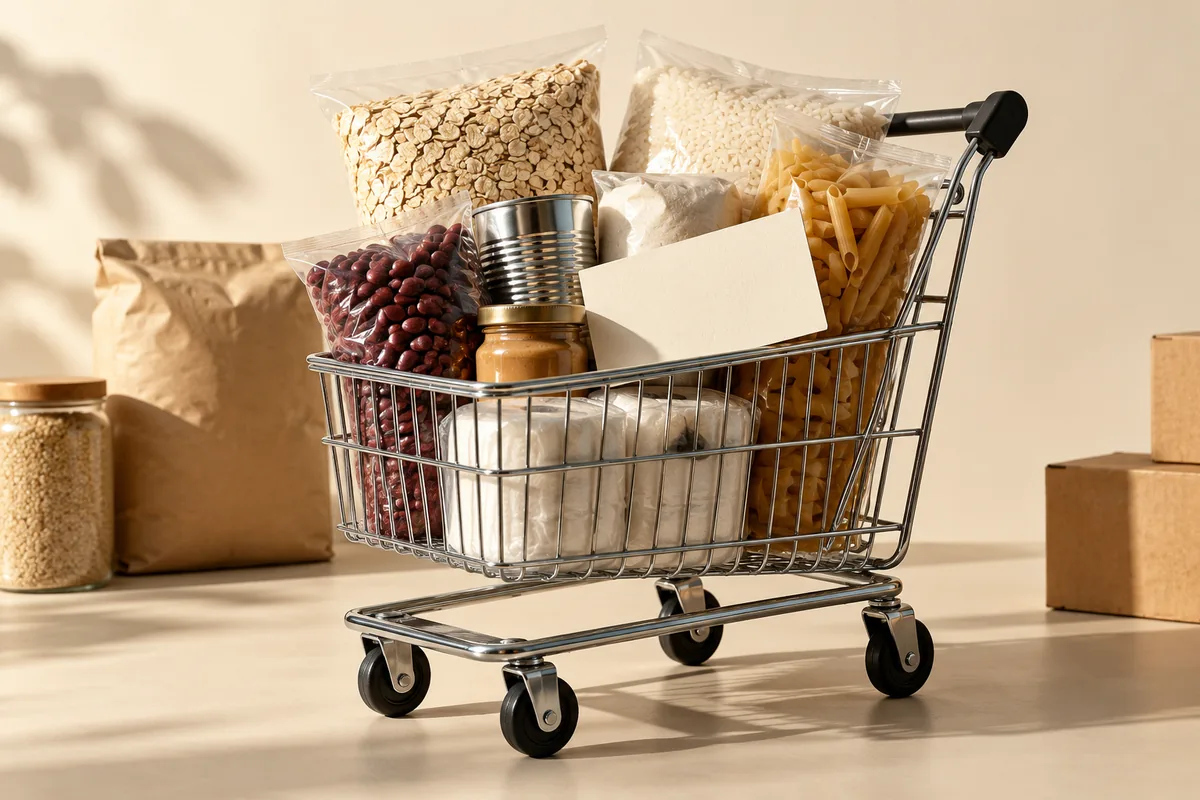
Walk into Costco and everything about the place screams volume. Pallets instead of shelves. Products stacked to the roof. Trolleys the size of small cars. People leaving with enough toilet paper to survive a minor national emergency.
It looks like a business built around selling as much stuff as possible.
That is true, but it is not the most interesting part.
Costco sold about US$270 billion worth of merchandise in its 2025 financial year. Its gross margin on those sales was only about 11%.
That is thin for retail.
Costco is not trying to squeeze as much profit as possible out of every item that passes through the checkout.
It has another source of income sitting underneath the whole thing.
You have to pay just to shop there.
The membership changes the economics
At the end of Costco’s 2025 financial year, it had 81 million paid members worldwide.
Those memberships generated about US$5.3 billion in annual fee revenue.
That does not mean membership fees simply equal profit. Costco still has huge operating costs across staff, warehouses, logistics and everything else needed to move nearly US$270 billion worth of product.
But it does change what Costco needs from the groceries.
A normal supermarket mainly makes money from the difference between what it pays for a product and what you pay at the checkout.
Costco has another lever.
The products make the membership useful. The membership gives Costco recurring revenue.
That means Costco can afford to be more aggressive on price than it might be if every dollar of profit had to come through the merchandise margin.
That is the part that makes the model interesting.
Costco does not need to maximise every basket
Costco could probably charge more for plenty of what it sells.
But doing that would weaken one of the main reasons people pay to be members in the first place.
The customer needs to feel like the membership gives them access to unusually good value.
So Costco is willing to leave some margin on the table if that helps keep the overall value proposition strong.
In 2025, Costco generated roughly US$30 billion in gross margin from nearly US$270 billion in net sales.
There is obviously still a lot of money being made on the merchandise.
But the percentage matters.
Costco is not asking: how much can we make on this item?
It is more interested in: will this help make the membership feel worth keeping?
That is a different incentive.
The renewal is where it gets really interesting
Costco’s worldwide membership renewal rate was 89.8% at the end of 2025.
In the US and Canada, it was 92.3%.
That is probably the most important number in the whole model.
Once someone pays to join Costco, the company has the next year to prove that the membership was worth it.
Every cheaper product, petrol saving, discounted TV or completely unnecessary bulk purchase adds to that calculation.
If the member decides they got enough value, Costco gets another year of fee income.
It does not need to win that customer from scratch again.
That starts to look a lot more like a subscription business than a normal supermarket relationship.
The shopping is what keeps the membership alive.
Executive members make that even stronger
Costco also offers an Executive membership.
In the US, the standard membership costs US$65 a year. Members can pay another US$65 to upgrade and receive a 2% reward on qualifying purchases.
Giving money back sounds like another hit to margin.
But the people using it are some of Costco’s most valuable customers.
Costco had 38.7 million Executive members at the end of 2025, and those members accounted for about 73.6% of worldwide net sales.
The reward gives high-spending members another reason to put more of their shopping through Costco.
Spend more and the membership becomes more valuable.
The more value you get from the membership, the less likely you are to cancel it.
That is a pretty strong loop.
Scale does a lot of the heavy lifting
Thin margins only work if you move a huge amount of product.
Costco does exactly that.
Its net sales reached US$269.9 billion in 2025, up about 8% from the year before.
It also carries a much narrower range of products than a typical supermarket or department store.
Instead of stocking dozens of versions of the same thing, Costco can concentrate demand into fewer products.
That matters because it lets Costco place enormous orders with suppliers.
More volume can mean better buying terms.
Better buying terms help Costco keep prices down.
Lower prices make the membership more attractive.
And the membership brings us back to the same place again.
Even the warehouse makes more sense once you see the model
A lot of Costco’s weirdness stops looking weird when you understand what it is trying to optimise.
The stores are basic because fancy fit-outs cost money.
Products stay on pallets because constantly unpacking and restocking decorative shelves costs money.
Pack sizes are huge because Costco is built around high-volume purchasing.
The range is limited because concentrating demand improves buying power and makes operations simpler.
None of this means every part of the warehouse has to make as much money as possible on its own.
The broader job is to make Costco feel worth paying for.
That is why some of the famous low-priced products are more important than their individual margin would suggest.
They help reinforce the idea that Costco gives members access to value they would struggle to get elsewhere.
But the groceries still matter
It is easy to push the membership argument too far.
Costco cannot survive on membership fees alone.
The merchandise business is what makes the membership useful in the first place, and Costco still earns substantial profit from selling products.
Its operating income in 2025 was about US$10.4 billion, so the merchandise side clearly contributes materially to the business.
The better way to think about it is that membership income gives Costco more freedom.
It does not remove the need to make money on products.
It reduces the pressure to maximise margin on every product.
That is a meaningful difference.
Most retailers need the same product to do two jobs: bring the customer in and generate the profit.
Costco can separate those jobs a little more.
The merchandise creates the value. The membership helps capture it.
What Costco is really selling
Costco is obviously a warehouse retailer.
But commercially, it makes more sense if you also think of it as a membership business wrapped around one.
That changes the incentive.
A supermarket wants another transaction.
Costco wants another renewal.
Those goals overlap, but they are not the same.
One pushes the business to make more from today’s basket.
The other gives it a reason to hand some value back if that makes the customer stay for years.
That is why the cheap petrol, giant pack sizes, thin margins and low-priced food are not just random Costco quirks.
They all help answer the same question:
Is this membership still worth paying for next year?
Sources
Costco and US Securities and Exchange Commission material used for the factual claims in this piece. Links checked 23 August 2026.