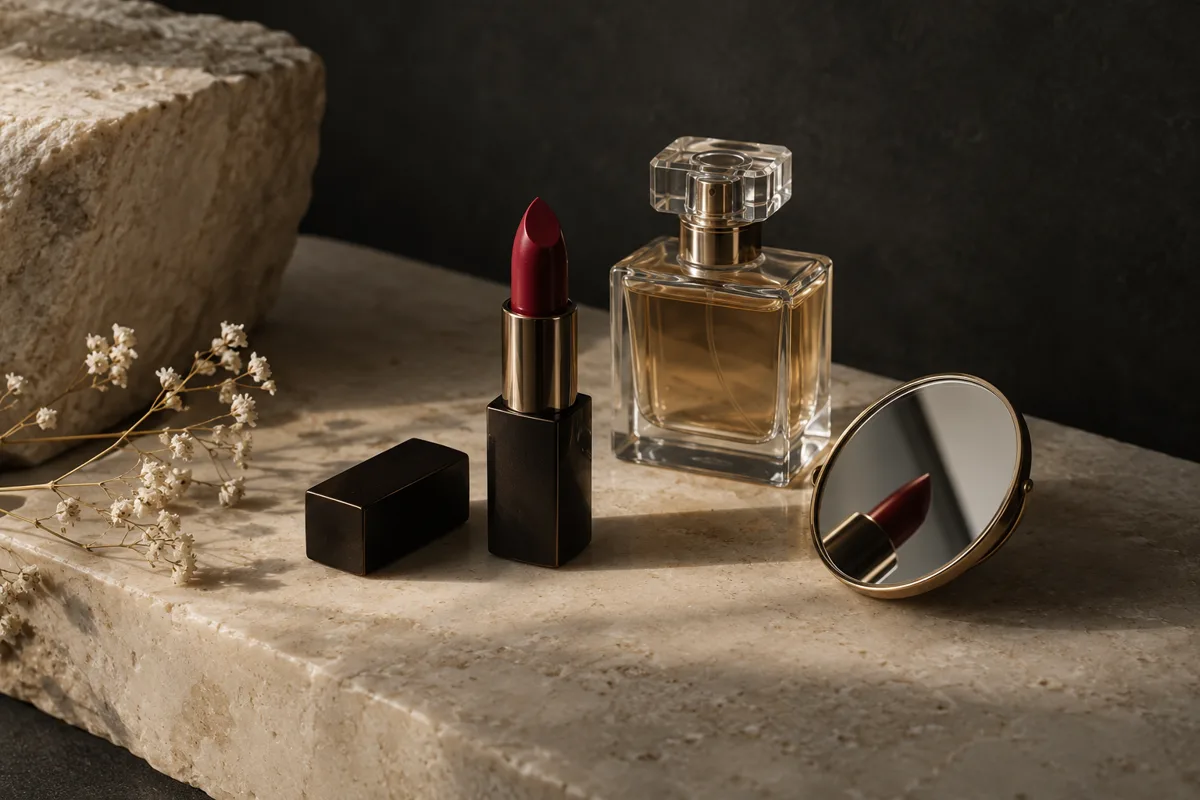
I was standing in Sephora recently waiting for people I was with to finish shopping.
I had absolutely nothing to do, which meant I started looking around at the store itself.
And Sephora is kind of weird.
People are spraying perfume everywhere. They are opening products, putting things on their hands, comparing colours, walking from one brand to another and generally touching almost everything they can get their hands on.
Nobody seems particularly concerned about stopping them.
There also appears to be nowhere for the bloke who has been dragged into Sephora to sit down, but we will come back to that.
The more interesting question was why Sephora is so happy for everyone to try everything.
A tester gets used up. Samples cost money. Products get messy. Staff have to clean everything. Some people will try something and walk out without buying it.
You would think a retailer selling fairly expensive beauty products would want a bit more control over all of that.
Sephora went the other way.
And that is a fairly big part of why the business works.
Beauty is hard to buy without trying it
There are some products you can understand pretty easily from a photo.
A toaster is a toaster.
You can see the size, the colour, read the specifications and have a reasonable idea of what is going to turn up at your house.
Beauty products are harder.
A photo of foundation can show you the colour in the bottle. It cannot tell you exactly how it is going to look on your skin.
You can read that a perfume has notes of vanilla, bergamot and whatever else gets written on perfume bottles. That still does not tell you whether you actually want to smell like it.
Lipstick, concealer, skincare, fragrances, hair products. A lot of them have the same problem.
There is a gap between knowing what the product is and knowing whether you actually like it.
Sephora lets you close that gap before you pay.
That sounds simple, but it removes a pretty major reason not to buy something.
If I am looking at a $70 product online and I am not sure whether I will like it, I can just decide not to take the risk.
If I have already put it on my hand and know I like it, there is a lot less left to think about.
The tester has done part of the selling.
Sephora was built around letting people loose
This was not always the normal way to sell prestige beauty.
The traditional department-store model put products behind individual brand counters. You usually dealt with someone representing that brand and they helped control what you could see and try.
Sephora helped flip that around.
LVMH, which has owned Sephora since 1997, still points to the ability to freely explore and try products as one of the ideas that changed beauty retail. Today Sephora has around 3,000 points of sale and carries more than 500 brands.
That means you do not have to walk up to a Dior counter and decide that you are shopping at Dior.
You can try Dior, walk three metres, try something from Rare Beauty, spray a completely unrelated perfume and then end up buying something from a brand you had never heard of when you walked in.
Sephora owns the room.
The brands fight for your attention inside it.
That is a very good position for Sephora to be in.
Trying one thing can turn into buying three
Say you walk into Sephora because you need concealer.
In the most efficient version of retail, Sephora would show you where the concealer is, take your money and get you out of the store.
That is not really what it wants.
It wants you looking around.
Because every extra product you pick up is another chance for something to go into the basket.
Maybe you try the concealer.
Then you see a perfume you have seen on TikTok.
Then you test a lip product while the person you are with is looking at something else.
Then someone working there recommends a moisturiser.
You came in for one thing and suddenly four products have entered the conversation.
Most of them will not sell.
They do not really need to.
The point is that they now have a chance.
That is why I think the freedom inside Sephora is much more important than it first looks.
The store is not just somewhere to collect a product you already decided to buy.
It is somewhere Sephora can create another purchase while you are standing there.
Having 500 brands makes this even better
Sephora does not need to convince you to fall in love with one particular beauty brand.
That is the beauty brand's problem.
Sephora needs you to like buying beauty products through Sephora.
There is a big difference.
Someone might walk in because they want Rare Beauty.
Rare Beauty has already done the work of creating the demand.
Sephora gets the customer through the door.
While they are there, Sephora can introduce them to another brand.
Then another one.
Then the next time they want something completely different, they still have a reason to come back to Sephora.
This is why the size of the range is useful beyond simply having lots of products.
More brands means more chances to have the thing that gets someone into the store.
Once they are in there, those brands are sitting next to hundreds of other things Sephora can sell them.
LVMH said Sephora continued adding to its brand selection in 2025, with Rhode producing what it described as a record-breaking launch. It also opened around 100 new Sephora stores during the year.
That is not what you would expect from a company that thinks physical beauty retail is dying.
The store also gives Sephora something the internet cannot
I can buy almost anything Sephora sells without leaving my house.
That should be a problem.
Beauty products are small, easy to ship and heavily influenced by social media. You can see a product on TikTok, Google it, compare prices and order it within a few minutes.
Yet Sephora keeps opening stores.
I think the reason is pretty straightforward.
The website is better once you know what you want.
The store is better when you do not.
If I already know the exact perfume I wear, buying it online is easy.
If I want a new perfume but have no idea which one, the website has a much harder job.
Sephora can show me 100 bottles and describe every one of them.
I still cannot smell any of them.
Put me in the store and that problem disappears.
The same store that looks less efficient than online shopping is doing something online shopping still struggles with.
It helps you decide.
And once Sephora helps you find something you like, buying it online the second time becomes much easier.
The physical store and the website are not necessarily competing with each other.
One can create the customer for the other.
Then Sephora tries to keep the customer
The next part is loyalty.
Sephora says it now has more than 70 million loyalty members globally.
In the US, its Beauty Insider program starts free and then has VIB and Rouge tiers for customers spending US$350 and US$1,000 a year respectively.
Members earn points, get free shipping, birthday gifts and access to different rewards and discounts.
None of that is revolutionary by itself.
The useful part is what happens when you combine it with Sephora's range.
If you buy five completely different beauty brands during the year, Sephora can sit above all five of them.
Your loyalty is not locked to the lipstick company or the perfume company.
It can be locked to the retailer.
So when you need the next thing, Sephora has already given you another reason to start there.
You know the store.
You have the account.
You have the points.
You might be moving towards the next tier.
And you already know you can go in and try things without committing to anything.
It starts getting easier to just keep buying through Sephora.
Even the free samples are trying to start the next purchase
Sephora carries the same idea online.
In the US, online merchandise orders can currently include two free samples selected by the customer.
Which sounds like a nice little freebie.
It is also another product trial.
You order something you already wanted.
Sephora puts something you did not want into the box.
Maybe you hate it.
That costs Sephora and the brand a tiny sample.
Maybe you like it.
Now there is another product sitting in your head that was not there before the parcel arrived.
That is the same thing happening in the store, just on a much smaller scale.
Let someone try it first.
Sell them the full-sized version later.
So what about the chairs?
I genuinely started thinking about all of this because there was nowhere to sit down.
To be clear, I have found absolutely no evidence of some internal Sephora policy saying husbands, boyfriends and random blokes need to remain standing so they keep moving through the store.
Unfortunately.
But it does fit the place.
Sephora is not really designed for people to park themselves somewhere and wait.
The whole store encourages movement.
Walk around.
Pick something up.
Try it.
Walk to the next section.
Compare it with something else.
Ask someone about it.
Find another product.
The customer doing nothing is not particularly useful to Sephora.
The customer wandering around is.
I doubt the missing chair is some genius revenue strategy.
The rest of the store pretty clearly is.
The mess is part of the model
This was probably the thing I had backwards when I first looked around.
All the open testers, sprayed perfumes and people putting products on themselves made the store look almost uncontrolled.
It is actually a pretty deliberate way to sell beauty.
Sephora gives up a little bit of product so the customer takes less risk.
It puts hundreds of brands together so coming in for one can lead to finding another.
It lets the brands generate demand, then tries to own the place where that demand turns into a purchase.
And once you buy, the loyalty program gives Sephora another shot at getting the next purchase too.
The tester is not really a cost Sephora is reluctantly putting up with.
It is part of the shop.
If you can get someone to pick a product up, put it on themselves and decide they like it before they have even reached the checkout, a fair bit of the selling has already happened.
Turns out letting everyone touch everything is probably the point.
Sources
LVMH and Sephora material used for the factual claims in this piece. Links checked 30 August 2026.