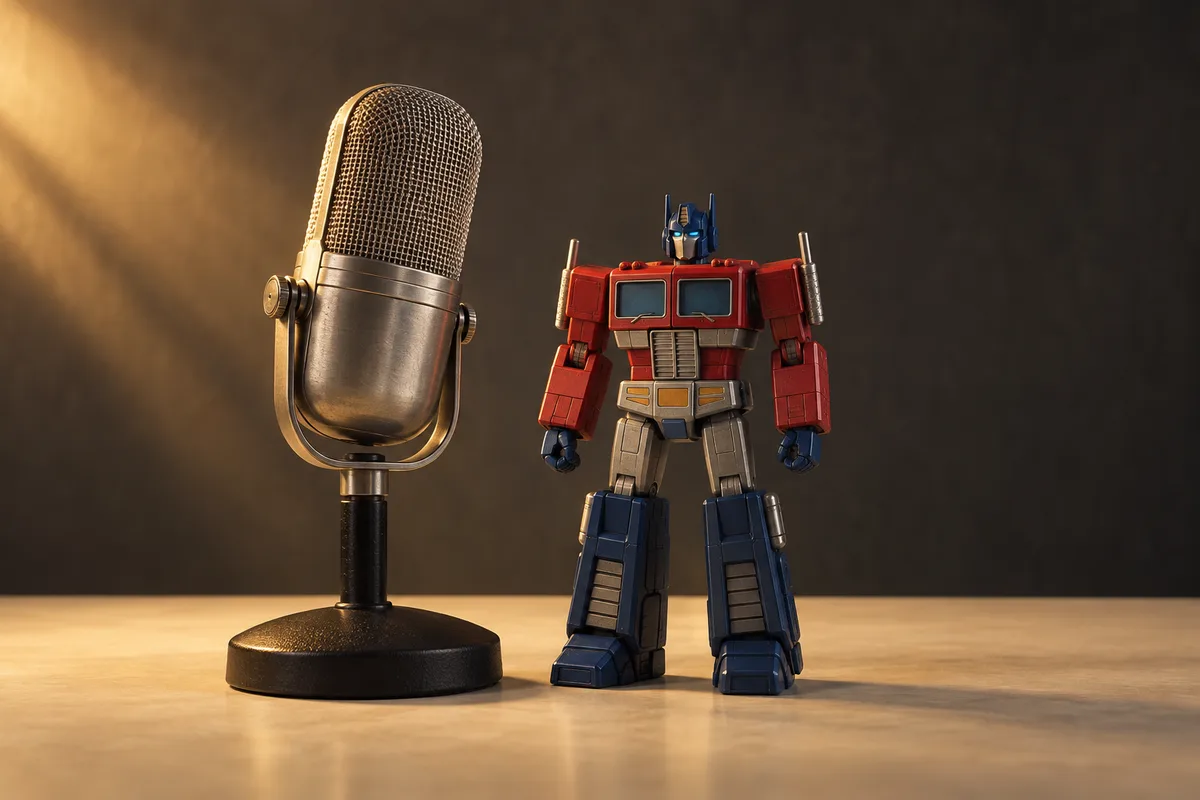
Optimus Prime is a slightly ridiculous character to feel this strongly about. He is a truck that turns into a robot and gives speeches about freedom. On paper, this should be a fairly difficult sell to an adult. Nevertheless, here we are.
For me, Peter Cullen is inseparable from the appeal. There is a weight to his voice that makes the character feel dependable, even when the situation involves an unreasonable amount of exploding machinery. That attachment is personal, but it also raises a commercial question: what happens when the person hired to perform a character becomes part of the reason people want the character at all?
He gave the character something to stand for
Cullen began voicing Optimus Prime in 1984. In a 2014 NPR interview, he explained that his performance drew on his brother Larry, a Marine veteran. Before the audition, Larry had advised him to avoid the shouting, exaggerated version of heroism and instead be “strong enough to be gentle”.
It is a good explanation of what makes the performance work. Cullen could sound authoritative without making authority the entire personality. The voice suggested someone who understood the seriousness of what he was asking others to do. There was strength in it, but also reassurance.
The writers, animators and designers all contributed to Optimus Prime. Cullen’s contribution was how those qualities sounded when the character spoke. Over repeated appearances, that sound could carry the audience’s previous experience of the character into a new story.
A familiar performance gives a returning viewer something they already recognise and value. A film can change its setting, cast and visual design while retaining that connection. The commercial benefit is the possibility of drawing on affection already earned, rather than asking the audience to build its attachment from scratch.
Cullen recognised that relationship himself. In an interview with Tim Lammers in 2014, he credited fans with campaigning to keep him in the role and spoke about the bond between them. That does not tell us how many tickets his involvement sold. It does show that the attachment was to a particular performer, as well as the character.
His voice became a product feature
The clearest example is surprisingly literal. Robosen’s Flagship Optimus Prime robot advertises spoken dialogue by Peter Cullen, identifying him as the original voice actor. Alongside the product’s ability to move and transform, the manufacturer presents his involvement as something worth telling a prospective buyer.
A robot transforming itself is already doing quite a lot to justify its existence on your desk. Yet the voice is still part of the sales pitch.
That tells us something useful about how the product is positioned. Its appeal includes recreating a recognisable version of Optimus Prime, and Cullen’s voice helps complete that experience. The buyer is being offered a connection to the character through the performance associated with him.
We cannot isolate how much someone would pay for that feature, or assume every purchaser cares equally. But the company’s decision to promote it is concrete evidence that his identity has become a selling point. His work has travelled beyond the original screen performance into the way another product is marketed.
It also raises a question businesses face well beyond entertainment. When a person helps build customer attachment, how much of that attachment belongs to the business, and how much depends on their continued involvement? A business can organise the production and own the brand while still relying on qualities an individual brings to it.
Creating that value does not automatically tell us who receives the financial benefit. Without Cullen’s contracts, there is no basis for claiming what he earned from a particular product or whether his pay reflected his contribution. Customer affection and contractual compensation are separate things.
A replacement inherits an expectation
Optimus Prime has been played by other actors. Chris Hemsworth voiced Orion Pax and Optimus Prime in the 2024 film Transformers One, which tells the character’s origin story. So the argument that the role literally cannot be recast would fall apart fairly quickly.
The more interesting issue is what the next performance is being compared with. Cullen helped establish an expectation of how Optimus should sound and feel. A new actor can offer a different interpretation, particularly in a different stage of the character’s life, but that existing attachment remains part of the audience’s experience.
For a franchise, continuity and reinvention each have value. Familiarity can bring people back; a new interpretation can give them another reason to care. The difficult judgement is deciding which elements can change without losing what made the character worth returning to.
Hasbro’s August 2026 tribute following Cullen’s death recognised his influence on how people understood the character’s courage and leadership. That is a fitting acknowledgement of a contribution whose effects extended far beyond a recording session.
My view is that Cullen helped create part of the demand the franchise could later draw on. His performance gave people something to recognise, trust and seek out again, including in products that explicitly sold his involvement.
For those of us attached to his Optimus Prime, the commercial language only describes the consequence. The reason we cared was the performance. Somewhere in the process of voicing a fictional truck, Peter Cullen made the audience believe in the person speaking.
Rest in peace, Peter Cullen. Thank you for giving us a voice worth looking up to.
Till all are one.
Sources
Primary interviews, manufacturer product information, film credits and Hasbro’s tribute. Links checked 9 September 2026.